
Our Blog

Mouthguard Q&A

September 13th, 2017
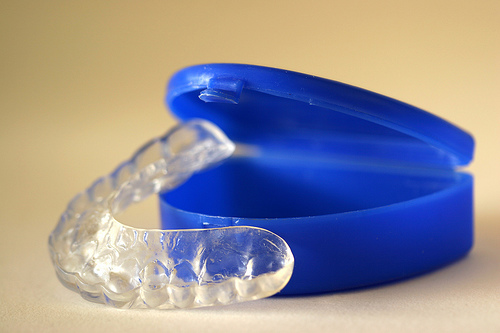
Today, Dr. Michelle Slezewski and Dr. Paul Engibous and our team at Pediatric Dental Associates thought we would talk about mouthguards, what they are, where to get them, and when to use them.

Q: What is a mouthguard?

A: A mouthguard, which is made of soft plastic, is a flexible, removable device that fits in your mouth and is adapted to fit comfortably to the shape of your upper teeth. A mouthguard will protect not only the teeth, but also your jaws, lips, tongue, cheeks, and gums, and should be worn anytime you are participating in full-contact athletic or recreational activities that may result in injury.

Q: How do mouthguards work? Why are mouthguards important?

A: A mouthguard works as a shock absorber to cushion your mouth from the effects of a blow to the face, head, or neck. Mouthguards protect teeth from not only fractures, but also hold the tongue, lips, and cheeks away from the teeth to avoid lacerations. Using a mouthguard as instructed by Dr. Michelle Slezewski and Dr. Paul Engibous can lessen the possibility of concussion and temporomandibular joint (TMJ) dislocation while you are out on the court or field. Increasingly, organized sports are requiring mouthguards to prevent injury to athletes, and research shows most mouth injuries occur when athletes are not wearing mouth protection.

Q: When should I wear a mouthguard?

A: Whenever you are participating in an activity that involves a risk of falling or head contact with other players. This includes football, baseball, basketball, soccer, hockey, and other competitive sports.

Q: How do I choose a mouthguard?

A: Dr. Michelle Slezewski and Dr. Paul Engibous and our team encourage you to choose a mouthguard that you can wear comfortably. There are several options of mouthguards you may choose from. First, preformed or what we call “boil-to-fit” mouthguards are found in sports stores. But your best choice is asking us for one during your next visit as we can fabricate a custom mouthguard for you at our Anchorage, AK office. A custom mouthguard will be more comfortable to wear and more effective in preventing injuries.

If you have any additional questions about mouthguards, please give us a call or ask us during your next visit!


Sleep Apnea: How we can help

September 6th, 2017

At Pediatric Dental Associates, we understand that getting high-quality sleep is vital to maintaining your overall health. Insufficient sleep can lead to an inability to concentrate, motor vehicle accidents, and difficulty performing at work. Since approximately 18 million Americans suffer from sleep apnea, this poses a significant public health problem. If you think you may have sleep apnea, talk to Dr. Michelle Slezewski and Dr. Paul Engibous and our team about devices that can help you get a good night’s rest.

What is sleep apnea?

Sleep apnea is a relatively common disorder in which breathing stops or becomes very shallow during the night. These bouts of paused breathing may last a few seconds or as long as several minutes. When 30 or more breathing interruptions occur per hour, sleep apnea leads to dramatic reductions in sleep quality. In many cases, this condition is caused by your airway becoming blocked or collapsed during sleep.

Anyone can get sleep apnea, but there are certain factors that increase your risk. Having small airways, being overweight, being male, or having a family history of sleep apnea increases the likelihood that you will develop the disorder. If you think you have sleep apnea, visit highly encourage you to visit our Anchorage, AK office for a thorough physical exam, comprehensive medical history, and a sleep study.

Treatment Options

Several treatment avenues are available for people with sleep apnea. One popular option is to wear an oral appliance. For example, a mandibular advancement device (MAD) looks like a sports mouthguard and slightly repositions your jaw, to keep your airway unobstructed. Another option is a tongue-retraining device (TRD), which holds your tongue in place to ensure that your airway stays open during the night.

For individuals with mild-to-moderate sleep apnea, dental devices are a smart option. Many patients enjoy improved sleep, reductions in snoring, and less fatigue during daytime hours. If you’re curious about getting an oral appliance to help with your sleep apnea, please consult our team at Pediatric Dental Associates. After a consultation and examination, we can fit the type of device that works best for your condition.

How do I know if my gums are receding?

August 30th, 2017

Gum recession, a common result of gum disease, occurs when the gum tissue that surrounds the teeth wears away or pulls back, forming pockets between the gumline and exposing more of the tooth. Gum recession occurs gradually, so you might not know that you have it. Left untreated, gum recession can result in tooth loss. In addition, there are several studies that suggest that gum disease is associated with modest increases in coronary heart disease. Here are five ways to know if your gums are receding.

1. Healthy gums are firm, light pink, and very elastic. If your gums don’t fit that description, then it’s time to visit our Anchorage, AK office. Red, swollen gums are a common symptom of gum disease, and may lead to gum recession.

2. Do your gums bleed easily when you brush or floss? If you have gum recession, even if you brush gently and with toothpaste specifically designed for sensitivity, it may still result in bleeding.

3. When you look in the mirror, do you see more of a tooth than you used to? This is one of the easiest ways to tell if you have gum recession. When gums recede, more of the tooth is visibly exposed. Look for lines or notches along the bottom of the teeth, as this typically indicates areas where the gums have receded.

4. One of the first signs of gum recession is tooth sensitivity. Does it hurt when you bite down or chew? The more gums recede, the more painful it is going to be. However, before you experience tooth sensitivity or pain, you may notice awkwardness when you bit down. When gum recession occurs, teeth can shift slightly, making it feel as if they are not properly aligned.

5. Loose teeth are a symptom of advanced gum recession and periodontal disease. In other words, the supporting bone structure of the teeth has already begun to deteriorate. If left untreated, it will result in tooth loss.

From deep cleaning (scaling) to gingival tissue grafting surgery, there are several ways to combat gum recession and periodontal disease. How gum recession is treated depends on how far advanced it is. Talk to Dr. Michelle Slezewski and Dr. Paul Engibous about what options are best for you.

Why Visiting the Emergency Room for Your Dental Problem isn’t a Good Idea

August 23rd, 2017

Emergency rooms are for emergencies, so before you head to the hospital because of a dental problem, you need to ask yourself this question: Is what you're experiencing really a medical emergency? While emergency room visits for dental related issues are on the rise across the United States , they’re not necessarily the best solution for every problem. Many people don't know about emergency dental care services, many of which are available 24/7, and so they go to the ER.

These types of statistics are common across the country. However, despite the numbers, not all dental problems are created equal. If you've experienced some type of injury to your mouth, jaw, or face, then an ER visit is a good idea, but if you're suffering from a toothache, cavity, or broken crown or veneer, then the ER is not the best place to handle the situation. If you're having a dental emergency, then seeking emergency dental care should be your course of action.

Seeking Long-Term Solutions

The ER doesn't provide a long-term solution to your dental issue; it only gives you temporary relief. There’s a chance they will simply hand you a prescription for pain medication and tell you to call your dentist in the morning. In the end, you’re going to be saddled with two medical bills, and nobody wants that. Even if the ER outfits you with a temporary crown or filling, you're still going to have to make a follow-up appointment our office.

There are numerous homemade remedies that can sooth tooth and gum pain. However, if you're experiencing a dental emergency, the ER is not the place to go. The specialized emergency team at Pediatric Dental Associates is available to take care of every dental problem you may have. In the case of a dental emergency, don't wait any longer than necessary. Feel free to contact our Anchorage, AK office at any time, day or night.