April 28th, 2015
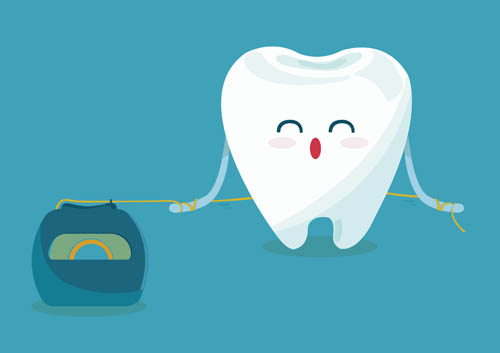
Of all the dental hygiene techniques you can use at home to promote clean teeth and good oral health, flossing is likely to be the one that troubles most people. It can be viewed as confusing and time-consuming, but when you learn how to floss your teeth correctly, you’ll find it’s easy to do on a daily basis.
Proper flossing techniques are vital to the health of your teeth and gums. These tips will help you with the correct flossing procedures. Likewise, Dr. Michelle Slezewski and Dr. Paul Engibous and our team can also help you learn how to floss effectively and efficiently.
Steps to Flossing Your Teeth Properly
- Choosing Dental Floss. You can find dental floss in various flavors, as well as waxed or unwaxed. If the floss you use seems to get stuck between your teeth, switch to waxed to make it easier.
- Flossing “Helpers.” Beginner flossers who have trouble coordinating the floss and the movements of their hands can use a floss holder to help them get in and around teeth.
- Preparing the Floss. Cut an 18-inch piece of floss to use for flossing a few teeth. This allows you to make progress before you must stop and cut another piece of floss.
- How to Hold It. Wind the ends around your middle fingers. Hold the floss taut, pinching each side with your thumbs and index fingers. Leave a couple inches free in the middle.
- The Process of Flossing. Use your index fingers to guide the floss toward your gum line. Bring it down between the teeth with a zigzag motion. Hold the floss in a C-shape around the tooth, and move it up and down along the side.
- Where to Floss. Use a clean portion of the floss to clean around and in between each tooth. Don’t forget about the molars in the back of your mouth, too!
Flossing: A Vital Part of Oral Care
Periodontal disease begins at the gum line; this is where flossing comes in. Regular flossing helps you remove plaque from the gum line and between your teeth to avoid gum disease. In conjunction with daily brushing and twice-a-year visits to Pediatric Dental Associates, floss each day to maintain good oral hygiene and overall health. Gum disease can have an impact on your general health, but it doesn't have to. This easy-to-prevent condition can be avoided with regular visits to our Anchorage, AK office and daily flossing. Allow our team to partner with you in maintaining a bright, shiny smile and good oral health.
April 21st, 2015

During the early days of the environmental awareness movement, those who demonstrated against pollution, toxic chemicals, and the general public health were known as hippies. The early 1970s were a time of change, and assertions that we needed to pay more attention to the Earth's atmosphere were generally dismissed. But within a couple decades, it had become clear that the previous generation was right; the citizens of the world needed to become more environmentally conscious.
Many people feel that they can't make a difference if they don't do something big. But caring for the environment doesn't have to be an all-or-nothing concept. In fact, the little things you do can add up to make a great impact, especially in our community. Here are a few ways you can help the environment on Earth Day, April 22nd and all year around.
Four Small Ways to be Environmentally Friendly
- Recycle Your Textiles. Nearly 21 million tons of textiles are added to American landfills each year, according to the Environmental Protection Agency. Donating your unwanted clothing to a secondhand store or an organization that repurposes fabric helps cut down on solid waste and conserves natural resources.
- Reduce Usage of Disposables. Plastic bottles and bags, disposable diapers and other things we can use and toss out are convenient, but they're not necessary. Simply choosing to replace one of type of disposable with a reusable product can help you cut down on waste that has a large negative impact on our environment.
- Conserve Water. If everyone in the United States turned off the water while brushing their teeth, more than 1.5 million gallons of water could be conserved. Turn the water on long enough to wet your toothbrush for brushing and rinsing, and then immediately turn the water off again.
- Turn Off the Lights. Flip the light switch to "Off" if you're going to leave a particular room for 15 minutes or more. This will conserve energy on incandescent light bulbs and cut down on cooling costs.
It's not necessary to be an activist or install solar panels all over your home to help the environment. Although you can do these things, the little everyday measures make a big difference in helping to conserve energy and the environment, while reducing your carbon footprint. Our team at Pediatric Dental Associates wants to remind you to celebrate Earth Day and help the environment, knowing that it will benefit your and your children's generation.
April 14th, 2015

The average adult has 32 teeth, a combination of molars, canines, and incisors. By middle age, however, most adults are missing at least one tooth due to an injury, decay, or gum disease. Though many people choose to forgo tooth replacement, Dr. Michelle Slezewski and Dr. Paul Engibous and our team at Pediatric Dental Associates will tell you that every tooth is important. Each plays a vital role in the structure of the mouth and in relationship to the remaining teeth. Leaving the space where a tooth once stood can have serious consequences. There are many reasons why severely decayed or missing teeth should be replaced as quickly as possible.
- Speech: A missing tooth can negatively affect the way you speak, depending on its location.
- Bite changes: The loss of one or more teeth can cause the redistribution of bite pressure onto other teeth. Over time, this can cause the teeth to shift and move into the space the tooth once held.
- Gum disease: Shifting teeth can make it easier for plaque to accumulate in hard-to-reach places. This can increase the risk of gum disease, which can lead to additional tooth loss.
- Bone loss: The teeth are place-holders in the jaw. When one falls out and is not replaced, the bone that once surrounded it begins to deteriorate and wear down.
- Aesthetics: A missing tooth leaves a visible gap between the teeth and can be a source of embarrassment and insecurity.
Advancements in modern dentistry have made it easy to replace missing teeth using natural-looking and functioning prosthetics. Dental implants are permanent solutions for replacing missing teeth with the use of special rods that are anchored in the jaw bone. These implants serve as artificial tooth roots that fuse with the jaw over time. When cared for properly, most dental implants can be fitted to last a lifetime.
To learn more about dental implants, or to schedule an appointment with Dr. Michelle Slezewski and Dr. Paul Engibous, please give us a call at our convenient Anchorage, AK office!
April 7th, 2015

The Importance of Facial Protection
Americans from all walks of life should mark April as National Facial Protection Month on their calendars. The American Association of Pediatric Dentistry, Academy for Sports Dentistry, American Academy of Pediatric Dentistry, and American Association of Oral and Maxillofacial Surgeons have combined forces to sponsor this annual campaign, which aims to educate and remind us of the importance of protecting our face and teeth against impacts and injuries.
Wearing a helmet can save your life and prevent devastating physical damage in a variety of situations, from playing football to riding a bicycle. According to the American Association of Oral and Maxillofacial Surgeons, helmets reduce the risk of various head injuries by as much as 85 percent. Whether helmet laws apply in your area or not, Dr. Michelle Slezewski and Dr. Paul Engibous and our team at Pediatric Dental Associates want you to make sure you and your loved ones wear helmets with the appropriate safety ratings for specific activities. (A sticker on or inside the helmet will usually indicate this rating.) Helmets can also help save your teeth if they come with an attached faceguard, an essential addition for football players and others involved in contact sports.
Preventing Dental Injuries
A mouthguard can protect you against a variety of dental injuries, such as cracked, broken, or knocked-out teeth. The American Dental Association states that mouthguards play an essential role in preventing up to 200,000 dental injuries each year, and many states mandate their use for sports activities such as football and hockey. The Academy for Sports Dentistry warns, however, that these mouthguards must be custom-fitted as precisely as possible to prove effective. Have a professional-quality mouthguard molded and fitted by our team at Pediatric Dental Associates for better protection than a generic store-bought or “boil-and-bite” variety can offer. These cheaper versions tend to wear out quickly, interfere with proper breathing, and provide uneven degrees of cushion against impacts. Always have a fresh mouthguard fitted for each new sports season.
Choose the right combination of helmet, faceguard, and mouthguard to protect your teeth and face this April, and tell your friends to do the same! To learn more about mouthguards, or to schedule an appointment with Dr. Michelle Slezewski and Dr. Paul Engibous, please give us a call at our convenient Anchorage, AK office!