
Our Blog

May Marks National Physical Fitness and Sports Month!

May 1st, 2013

Did you know the month of May is designated National Physical Fitness and Sports Month? After all, there isn't a better time to celebrate physical activity as when the warm weather and sunshine makes its way back into our lives!

Now that the flowers are in bloom and the weather has warmed up, it's easier to go outside and soak up the sun. After spending the winter working out in gyms or doing crunches at home, exercising outdoors can be a lot more enjoyable as well. Whether you enjoy hikes, jogging, or biking, spring gives us a chance to smell the grass, take in the rays, and enjoy the blue sky—all senses that we just can't duplicate at the gym.

If jogging or biking isn't your cup of tea, we encourage you to try a sport! Sports have some amazing qualities that we often overlook. Team sports like baseball and soccer, and individual sports like golf and tennis can improve your coordination and agility, in addition to building determination, confidence, drive, hard-work, pride, leadership, and time management.

At Pediatric Dental Associates, we always encourage our patients to stay fit by exercising or participating in sports. However, we want to remind you to always wear a mouthguard or other form of facial protection when playing sports. To learn more about how often your child should exercise, or to ask us about obtaining a mouthguard, please give us a call!

Are Dental X-Rays Safe?

April 24th, 2013

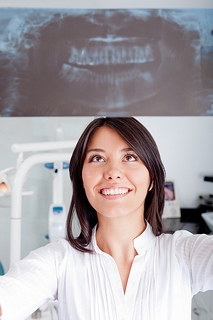
YES! X-rays have been used in dentistry for a long time, and the amount of radiation has significantly decreased with advances in technology. While there is risk in every health diagnostic procedure at Pediatric Dental Associates, the benefits must outweigh the risks. Dental X-rays do indeed fall into this category.

X-rays are exposed to a type of film to produce an image. The amount of X-rays required to produce this image differs with film speeds. Speed E or F is highly recommended, and digital X-rays require up to 50% less than speed E or F film. The digital X-ray software can adjust the exposure to produce a quality image. Digital X-rays are becoming a new standard and are most common.

Lead aprons have been used to reduce the amount of scatter radiation. All X-ray units have a cone to focus the X-ray beam so the exposure is highly localized. Lead aprons continue to be worn as a precaution for pregnant women, and a thyroid collar should also be worn. In most cases, this is sewn into the lead apron.

We get radiation exposure from environmental factors as well as healthcare diagnostic and treatment tools. To place this in perspective, in one year a person is expected to have 360mRem per year from the sun, air etc. By comparison, a single set of bitewing X-rays is 0.3mRem. Radiation can accumulate in our body over a lifetime, and additional exposure should be avoided whenever possible.

Do adults need fluoride treatments?

April 18th, 2013

Many dentists and hygienists recommend fluoride treatments for their adult patients. You might ask yourself, “Do I really need a fluoride treatment? I thought those were just for my kids.” After all, most insurance plans cover fluoride treatments only up to the age of 18.

What you need to know as a dental consumer is that studies have shown topical fluoride applications performed by a dental professional create a significant benefit for adults who have moderate to high risk for cavities.

There are several circumstances that warrant extra fluoride protection among adults. Many prescription medications reduce saliva flow or otherwise create dry mouth. A reduction in saliva increases cavity risk.

Adults often experience gum recession, which exposes part of the root surface of teeth. These areas are softer than the hard enamel at the top of the tooth, which makes them more susceptible to decay.

In addition, adults often get restorative work such as crowns or bridges. Fluoride can help protect the margins of these restorations, ultimately protecting your investment.

Today many people opt for orthodontic treatment (braces) as adults. Braces make it more challenging for patients to maintain good oral hygiene. Just ask your kids! Fluoride can keep the teeth strong and cavity-free even with the obstacle of orthodontic appliances.

Have you had a restoration done within the last year due to new decay? If you have, that puts you at a higher risk for cavities. Fluoride treatments are a great way to prevent more cavities in patients who are already prone to them.

How is that flossing coming along? You know you should floss daily, but do you? If your oral hygiene is not ideal, fluoride could be just the thing to keep your neglect from leading to cavities between your teeth.

Fluoride can also help with the growing problem of sensitive teeth. Diets high in acidic foods and beverages, general gum recession, and increased use of whitening products all tend to produce sensitive teeth. Fluoride treatments re-mineralize tooth enamel and reduce that sensitivity.

Patients who undergo radiation treatment for cancer also benefit from topical fluoride applications. Radiation damages saliva glands, thus greatly reducing the flow of saliva. Saliva acts as a buffer against the foods we eat and beverages we drink. Once again, less saliva greatly increases the risk of cavities.

If one or more of these conditions applies to you, consider requesting a topical fluoride treatment. Be sure to ask Dr. Paul Engibous at your next appointment whether you might benefit from a topical fluoride application.

Make Every Day Earth Day

April 18th, 2013

Earth Day began in 1970 as an event to raise awareness of our environment. What began as a single day in April is now recognized around the world to bring attention and education to global environmental issues. Conserving our natural resources, reducing water and air pollution, and developing green technologies are all ways in which we can improve the environment around us.

Reduce, Recycle, and Reuse

One of the easiest ways to participate in Earth Day is by simply reducing the amount of refuse that ends up in landfills. Many communities have recycling programs for paper, plastic, and metal refuse. By keeping recyclable items out of landfills, we reduce the need for new disposal space and the amount of energy needed for burning refuse. Recycling products also helps conserve the resources that are used in making new products.

You can save money by reducing your consumption of many everyday products. Single disposable water bottles can be recycled but they are costly. By using filtered faucet water, you can conserve your financial resources. Disposable paper towels can also be wasteful. Consider reusable cleaning rags for the majority of your chores.

Reusing items saves both the environment and your finances. A large number of products can be re-purposed to create a new item. Old furniture can be remade into a new piece. Old clothing can be used for craft items. If you are not able to find ways to reuse your old items, donate them to a charity. Remember to continue your positive environmental steps on a daily basis.

Other things you can do to improve the environment

April 22, 2012 marked the 42nd Earth Day celebration. The event was recognized in 192 countries around the world. Everyone, young or old, can find ways to participate in improving the environment. Some ideas include:

  • Planting trees
  • Picking up litter
  • Reducing energy consumption
  • Walking, bicycling, or carpooling to work or school
  • Disposing of hazardous waste properly
  • Using rain barrels to conserve water for plants

Earth Day is designed to appreciate and celebrate the health of the earth. Keeping the earth healthy is important, but keeping your mouth healthy is important too. Healthy teeth and gums contribute to your overall health and well-being, so remember to call our team at Pediatric Dental Associates today for a checkup. Have a happy and healthy Earth Day, from Dr. Paul Engibous!